The Exposure Triangle Is Not a Rule. It's a Negotiation.
Every photograph exists because you agreed to sacrifice something. Time. Light. Clarity. The world will not give you all three.
The exposure triangle exists because reality refuses to cooperate. Light fades. Subjects move. Moments collapse before you finish thinking.
Once you accept this, the triangle stops feeling like homework and starts feeling like conversation.
Shutter Speed Is Your Decision About Time
Shutter speed answers one question: does this moment happen once, or does it continue?
Fast shutter speeds honor moments that will never repeat. A leap. A glance. A collision of timing. When you freeze motion, you're saying this instant deserves to exist exactly as it was.
Slow shutter speeds acknowledge that some moments are not singular. A walk. A current. A crowd flowing through space. Blur is not failure here, but proof that time passed.
Most motion blur problems aren't technical mistakes. They're photographs that never received clear instruction. The camera was waiting. You didn't decide.
Aperture Is Your Decision About Attention
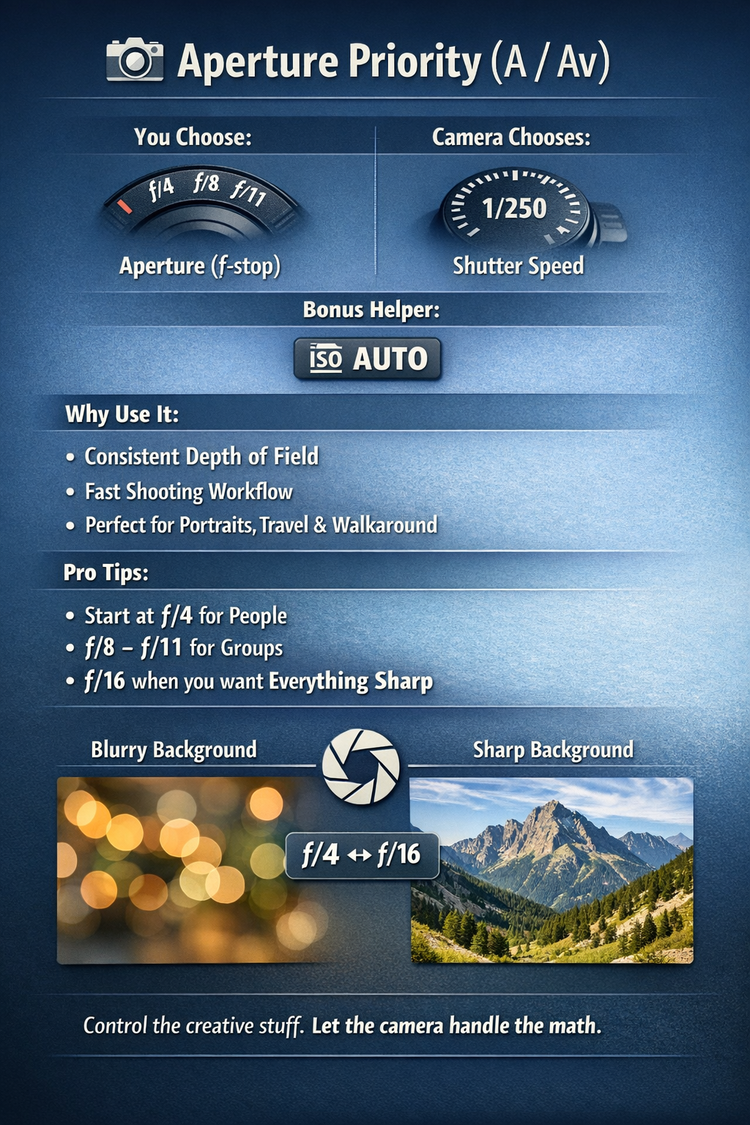
Aperture controls depth of field, but depth of field is never the point. Attention is.
Wide apertures remove information. They simplify reality so viewers don't have to search. They work when emotion lives in one face and everything else is distraction.
Narrow apertures include information. They explain how subject and setting relate. They work when context is the story.
There's no objectively correct depth of field. Only honesty about what you want people to notice.
When your images feel chaotic, your aperture is usually too wide for the story you're telling. When they feel hollow, it's often too narrow.
ISO Is Your Decision About Reality
ISO is not brightness. It's permission to work with what you have.
At low ISO, you're asking the camera to record light as it exists preserving transitions, skin tones, gradient, shadow detail. It rewards patience and actual light.
As ISO climbs, the camera amplifies whatever light remains. This is not free. It costs you range and smoothness. But it gives you access to moments that would otherwise vanish.
Noise is not a defect. It's evidence of scarcity.
Some photographs demand cleanliness. Others demand presence. Knowing which is which, now that's experience.
The Triangle Is a System, Not Three Separate Dials
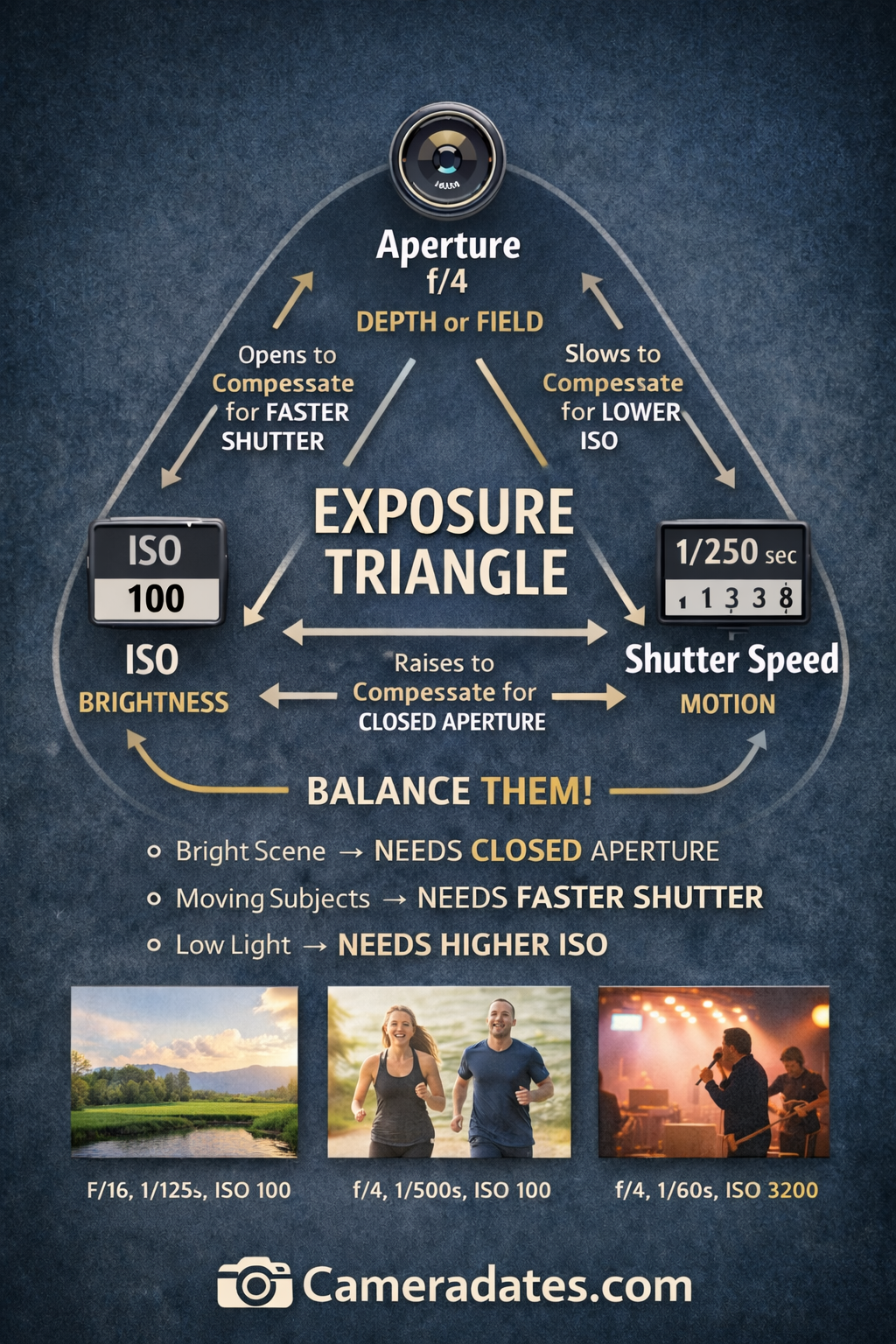
You don't choose shutter speed, aperture, and ISO independently. You choose a priority. The others follow.
When motion matters most, shutter speed leads. When depth matters most, aperture leads. When image quality matters most, ISO leads.
Professionals don't chase perfect exposure. They protect what cannot be recovered later.
Motion blur cannot be repaired. Depth of field cannot be invented in post. Noise can often be forgiven.
That hierarchy matters.
What This Actually Looks Like
In bright daylight, you have freedom. Low ISO protects quality. Shutter speed and aperture become expressive choices.
Indoors, something must give. You decide whether to sacrifice motion, depth, or cleanliness.
At night, the triangle becomes brutally honest. You cannot have everything. This is where your style announces itself.
Two photographers in identical light will make different choices. One values stillness. One values atmosphere. Both can be correct.
The Part Nobody Mentions
The exposure triangle is not about getting everything right. It's about deciding what you're willing to lose.
Every strong photograph sacrifices something. Absolute sharpness. Perfect tonality. Complete clarity. That loss is intentional even when you don't yet realize you're making it.
When you stop fighting the triangle and start negotiating with it, your photographs stop looking accidental.
Final Truth
Your camera wants balance. You want meaning.
Once you understand how time, attention, and sensitivity exchange value, exposure becomes instinct.
And instinct is where photography stops being technical and starts being yours.
Never forget. Shoot what matters.