The Light Is Always Changing. Are You Paying Attention?
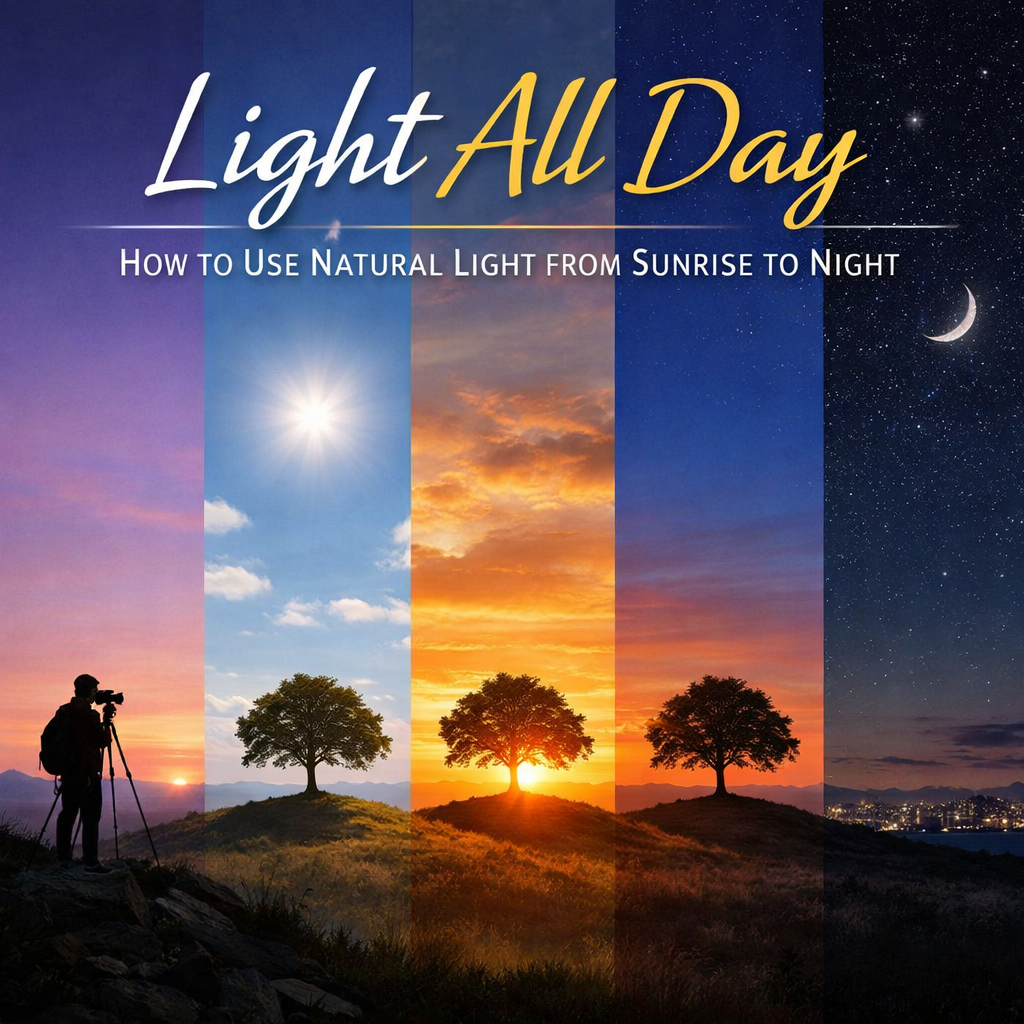
There is a version of photography where you wake up before sunrise, catch golden hour, and then pack up your bag and call it a day. And honestly, that version is not wrong. Golden hour is beautiful. But if that is the only time you think good light exists, you are leaving an enormous amount of photography on the table.
Natural light does not clock out at 8am. It just changes. And learning to read those changes throughout the entire day is one of the most valuable skills you can build as a photographer. It costs nothing. It requires no new gear. It just asks you to pay attention.
Let me walk you through what light actually does from morning to night, and more importantly, how you can use all of it.
Early Morning: Soft, Cool, and Full of Possibility
Before the sun clears the horizon, the world is lit by open sky. This is called ambient or diffused light, and it is extraordinarily flattering. Shadows are gentle. Colors are cool and muted. Contrast is low.
This kind of light is wonderful for portraits, street photography, and landscapes where you want a calm, almost meditative mood. The world has not woken up yet, and your images can feel that way too.
What a lot of photographers miss is that this window lasts longer than they think. Depending on the season and your location, you might have 30 to 45 minutes of this beautiful soft light before the sun starts changing everything.
Your job here is to slow down. Use a wider aperture to soak in what light is available. Watch for mist, dew, and stillness. The world before 7am has a quietness that is genuinely hard to replicate at any other time of day.
Mid Morning: The Light Gets Directional
As the sun rises higher, it starts doing something interesting. It picks a direction. Shadows lengthen to one side. Textures become more pronounced. Surfaces that looked flat an hour ago suddenly have depth and dimension.
This is a fantastic time to photograph architecture, landscapes with interesting terrain, and anything where texture tells part of the story. Side lighting at this time of day is one of the most underrated tools in a photographer's kit.
The light is also warming up in color temperature, moving from those cool blues of early morning toward a more neutral, natural tone. White balance matters here. If you are shooting in auto white balance, check your results carefully. Sometimes the camera will correct the warmth right out of the image, and that warmth is exactly what made the shot work.
Midday: The Light Most Photographers Abandon
Here is where a lot of photographers pack up and go home. Midday light has a reputation for being harsh, unflattering, and difficult to work with. And in some situations, that reputation is earned. Direct overhead sun creates strong shadows under eyes and chins in portraits, and it can blow out highlights in landscapes.
But here is what I want you to consider. Harsh light is not bad light. It is just specific light.
Midday is extraordinary for certain subjects. Black and white photography thrives in this kind of contrast. Abstract and graphic compositions, where shape and shadow are the point, come alive under strong overhead sun. Water sparkles. Colors saturate. City streets have a gritty, direct energy that suits documentary and street photography beautifully.
The key is to stop fighting the light and start working with what it is actually doing. Find shade and use it as a natural softbox. Look for reflected light bouncing off walls and buildings. Shoot into the shadows instead of into the sun.
Midday is not the enemy. It is just an honest kind of light. It shows you exactly what is there, and sometimes that is exactly what you need.
Afternoon: Warmth Returns and the World Opens Up Again
As the afternoon progresses, something starts to shift. The sun begins its descent, and the angle changes again. Shadows stretch back out. The light warms up. That golden quality people associate with golden hour starts arriving earlier than most photographers expect.
Mid to late afternoon, roughly 2pm to 4pm depending on the season, can be genuinely beautiful. It shares a lot of qualities with mid morning light but with a warmer palette. For portraits outdoors, this window is often underutilized because people are waiting for the official golden hour that comes later.
Do not wait. Start shooting. The light is already doing interesting things.
This is also a good time to think about backlight. Positioning your subject between you and the sun at this angle creates rim lighting and a warm glow around edges that is difficult to achieve any other way. It takes some exposure practice to get right, but the results are worth the effort.
Golden Hour and Blue Hour: Worth Every Cliche
Yes, golden hour is as good as people say. The sun is low, the light is warm and directional, shadows are long and dramatic, and everything seems to glow from within. There is a reason photographers have been chasing it for as long as cameras have existed.
But blue hour, the 20 to 30 minutes after sunset, deserves equal billing. The sky becomes a giant softbox. Artificial lights start to balance with the ambient sky. The color temperature drops back into cool blues and purples. For cityscapes, architecture, and any scene where you want to balance interior or street lighting with the sky, blue hour is often better than golden hour.
The key with both is to be set up before they start. Golden hour moves fast. Blue hour moves even faster. If you are still hiking to your location when the light peaks, you have already missed it.
Night: Light Becomes a Subject
Once full dark arrives, light stops being something that illuminates your subject and starts being the subject itself. Street lamps, neon signs, car headlights, and the glow of windows all become creative tools.
Night photography rewards patience and curiosity. It also rewards knowing your camera well, because you will be pushing it into territory where noise, long exposures, and manual focus all come into play. But that is a conversation for another post.
The Habit That Changes Everything
Reading light is a daily practice, not a one time lesson. The photographers who make consistently compelling images are the ones who notice light all the time, not just when they have a camera in their hand.
Start paying attention on your commute. Notice how the light hits buildings differently in the morning versus the afternoon. Watch how cloud cover changes the quality of shadows. Observe what happens to color when the sun drops behind a hill.
You do not need to be shooting to be learning. Your eyes are always available, and every time you really look at the light around you, you are building the instinct that will make your photography sharper, more intentional, and more alive.
The camera comes later. The seeing comes first.
Shoot What Matters.