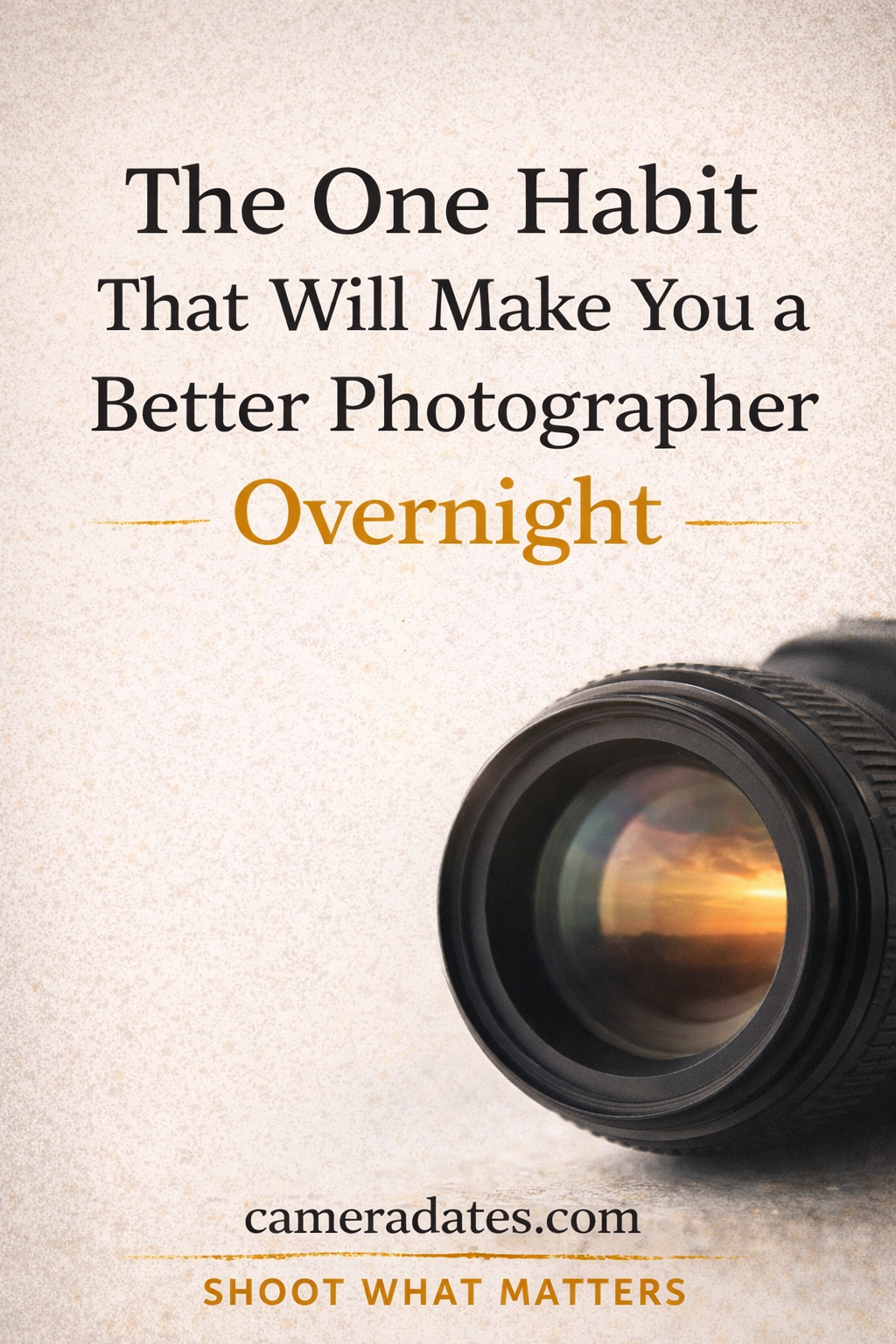
The One Habit That Will Make You a Better Photographer Overnight
First things first. It has been a little while since we sat down together here, and that is on me. Life has a way of filling every available gap, and sometimes the things we love most are the ones that quietly get pushed to the back of the shelf. But we are here now, and I have been saving something good.
Let's talk about the delete button. Specifically, why you are probably not using it enough.
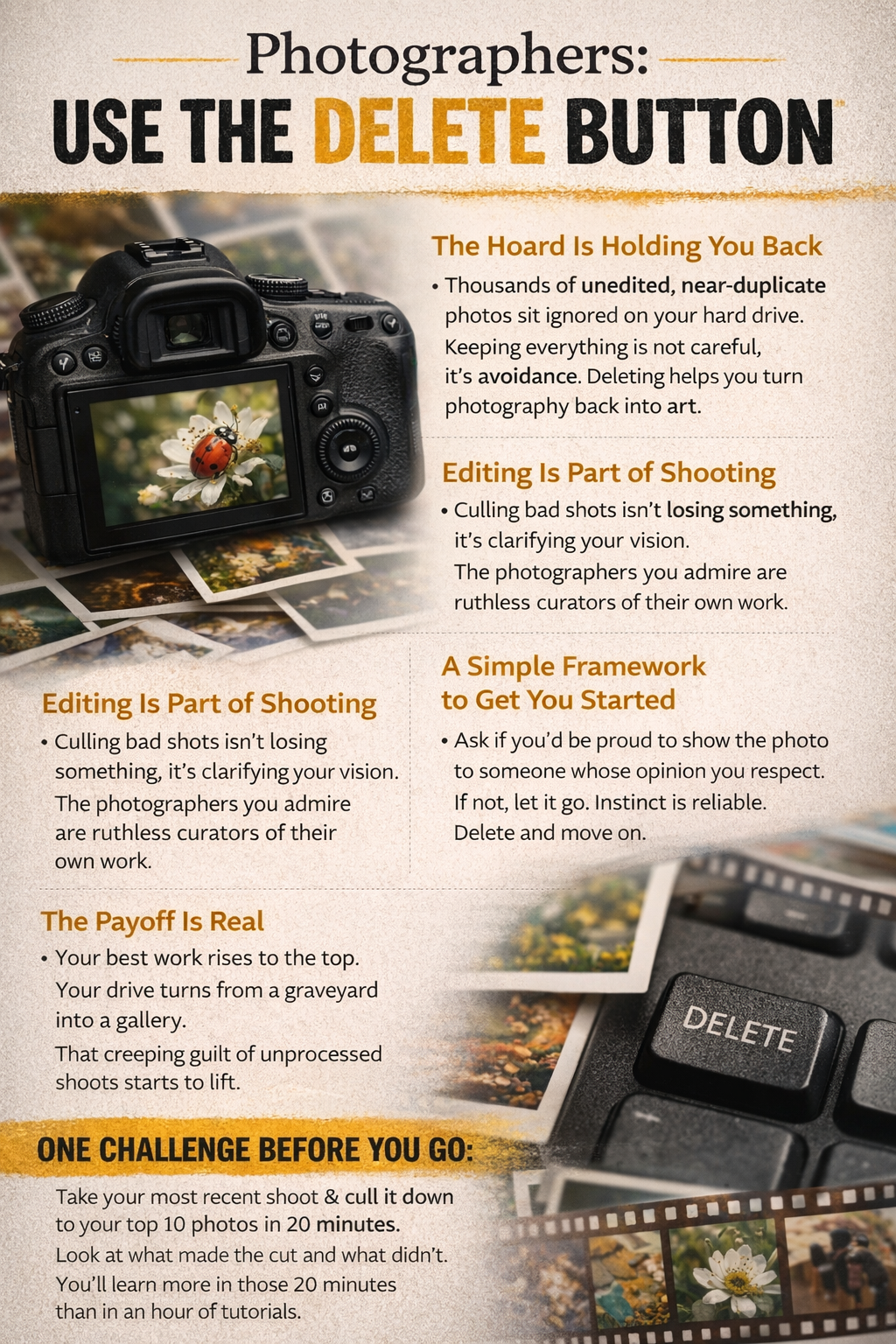
The Hoard Is Holding You Back
Most photographers are hoarders. Not in their homes necessarily, but on their hard drives. Thousands of images sit in folders, unedited, unsorted, and mostly forgotten. A slightly blurry version and a sharp version of the same shot, both kept, just in case. Five near identical frames from a burst, all preserved like they each have equal claim to your time and attention.
Here is the uncomfortable truth. Keeping everything is not careful. It is avoidance.
When you refuse to delete, you are refusing to make a decision. And the more you avoid decisions, the more your photography starts to feel like a chore rather than art.
Editing Is Part of Shooting
The photographers whose work you admire are not just good at pressing the shutter. They are ruthless curators of their own output. They understand that a great photographer is not someone who takes great photos. They are someone who knows which photos are great.
That distinction matters more than most people realize.
Culling your images, really sitting with them and deciding what stays and what goes, is not a task that follows the creative work. It is part of the creative work. It sharpens your eye. It teaches you what you are actually going for. It forces an honest conversation between you and your own instincts.
When you delete a weak frame, you are not losing something. You are clarifying something.
A Simple Framework to Get You Started
If the idea of culling a backlog of thousands of images feels paralyzing, try this. Do not think about it as deleting photos. Think about it as finding the ones worth keeping.
Go through a recent shoot and ask yourself just one question about each image. Would I be proud to show this to someone whose opinion I respect? Not a family member who would compliment anything you put in front of them, and not a stranger online fishing for likes. Think of someone whose taste you actually trust, someone who would be straight with you. Hold each image up to that standard and you will have your answer within a couple of seconds. That instinct is reliable. Use it.
Not every shot needs to be portfolio worthy. But if the honest answer is no, and you know within about two seconds whether it is, let it go. You are not erasing the moment. The moment happened. The photo just did not do it justice, and that is fine.
Delete it and move on.
The Payoff Is Real
Here is what happens when you start culling properly. Your best work starts to surface. Instead of a folder of 600 images from a weekend shoot where the highlights are buried, you have 40 images you actually feel something about. You start to see your own patterns. The angles you return to. The moments you consistently nail. The situations where your eye is still developing.
Your hard drive stops feeling like a graveyard and starts feeling like a gallery.
And perhaps most importantly, you stop feeling behind. That creeping guilt of unprocessed shoots and unsorted folders starts to lift, because you are making decisions instead of deferring them.
One Challenge Before You Go
Go find your most recent shoot. Not your best shoot, your most recent one. Set a timer for 20 minutes and cull it down to your top 10 frames. Just 10. No cheating with an 11th.
Then look at those 10 images together and notice what they have in common. What drew you to each one? What did the ones you deleted lack?
That exercise will teach you more about your own photography in 20 minutes than most tutorials will in an hour.
Good to be back. Let's keep shooting what matters.
Shoot What Matters. Jonathan Charles Photography