The Camera You Have With You Is the Right Camera
Let me tell you something that might sting a little.
The gear is probably not the problem. It usually isn't the lens, the autofocus system, the sensor, the lack of a tripod, or the fact that your camera doesn't have the newest feature everyone is talking about this month. More often, the problem is much simpler: the camera is at home.
I have heard every version of the excuse because I have used plenty of them myself. The light is not good enough today. I do not have the right lens for this. The camera is too bulky to carry. I will take it next time. I will go out properly this weekend. I will wait until I have more time. Then the weekend comes. Something fills it. The camera stays in the bag.
Meanwhile, life keeps happening anyway. Light moves across walls. Storms build and disappear. Kids grow up. Dogs get older. Leaves turn. Fog settles into places you have driven past a hundred times. Somebody laughs in exactly the right light for about two seconds and then the moment is gone. Photography does not wait until you are properly equipped.
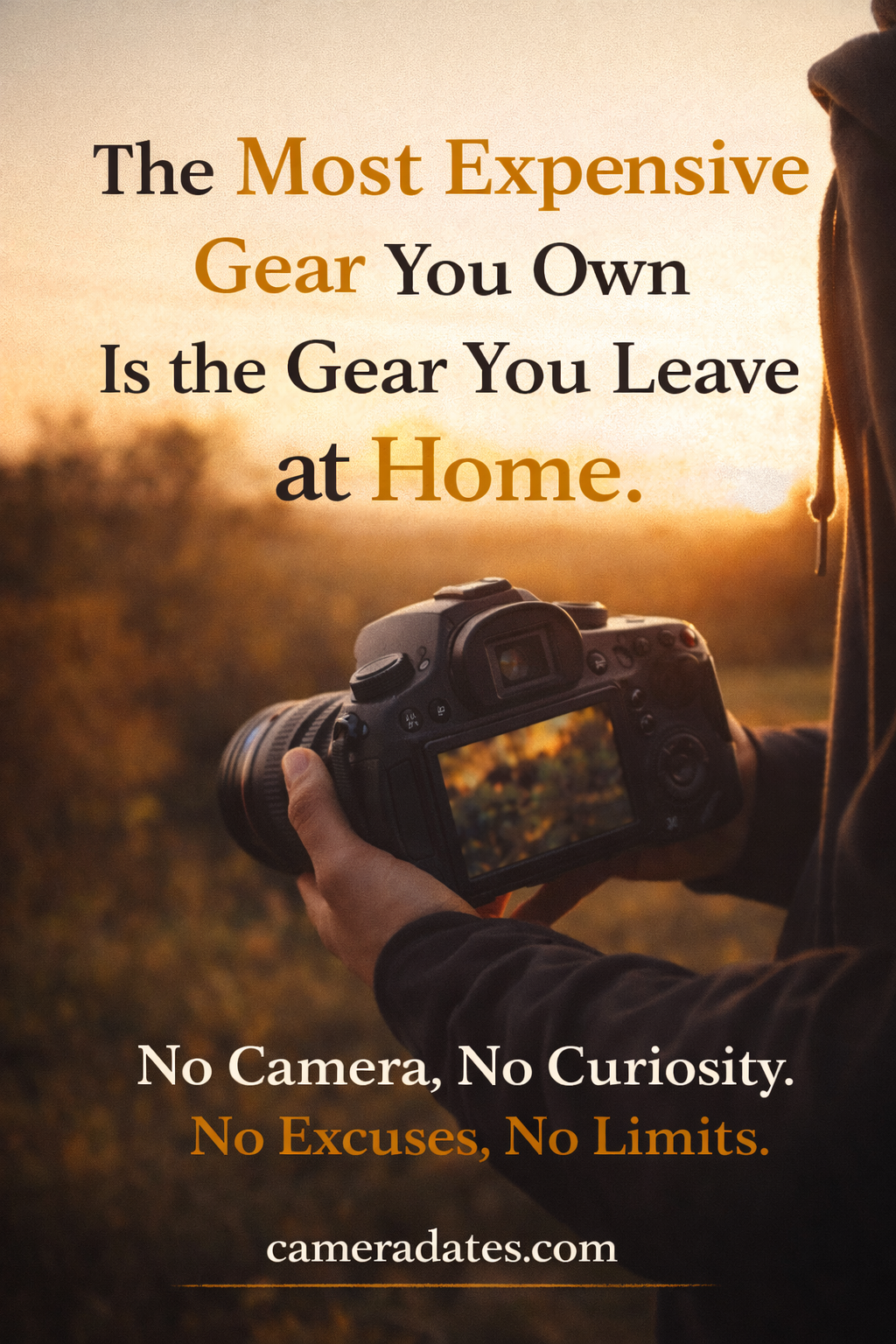
The Most Expensive Camera Is the One You Leave Behind
That phrase has been said in different ways for years because it's true. The camera you own but never carry cannot make a photograph. The expensive lens sitting safely at home cannot help you when the light breaks through the clouds over the grocery-store parking lot. The camera body you researched for three months cannot photograph the strange reflection you notice while waiting for your oil change.
And this is where gear can become a surprisingly comfortable excuse. If the camera isn't quite good enough, neither are the photographs expected to be. If you need another lens first, you don't have to test what you can do with the one you already own. If you are waiting for a proper photography trip, you never have to risk making ordinary photographs in ordinary places and discovering that some of them simply do not work. The dream stays intact. Someday, when everything lines up, you will really start. That someday can last for years.
Gear Can Become a Permission Slip
There is nothing wrong with wanting better equipment. Cameras and lenses have real differences, and sometimes a particular tool genuinely makes a photograph possible that another tool cannot. But there is a difference between buying a tool because you have identified a limitation and buying one because you hope it will create momentum.
Momentum usually comes first. You start carrying the camera. You start noticing things. You start making photographs. Then eventually you discover a specific problem worth solving. That is a very different relationship with gear.
Instead of asking, “What should I buy to make better photographs?” you begin asking, “What exactly can I not do with what I have?” That is a much better question.
The Camera Changes the Way You Walk Through the World
Something interesting happens when you carry a camera regularly. You start seeing differently, even before you raise it. A boring parking lot becomes geometry. A patch of late-afternoon light becomes a subject. Reflections in windows start behaving like layers. Telephone poles become lines. A puddle becomes a mirror. The side of an old building suddenly has texture you somehow never noticed before. The world did not change. Your attention did.
That is one of the most important things carrying a camera can do for you. It keeps your eye warm. Photographic seeing is not a switch you flip on only when you arrive at a national park. It is a habit, and like most habits, it gets stronger through repetition. If you only photograph when everything is spectacular, you become dependent on spectacular things. If you practice seeing when almost nothing is happening, you become much better prepared when something truly worth photographing does happen.
Ordinary Places Are Where the Habit Gets Built
Think about the places you move through every week. The road to work. The school pickup line. Your backyard. The hardware-store parking lot. The gas station. The kitchen at 7:00 in the morning. The walking trail near your house that you stopped noticing years ago. Most of those places do not announce themselves as photographic opportunities. That is exactly why they are useful. They force you to look for the photograph rather than wait for the subject to impress you.
Maybe the photograph is a shadow moving across a wall. Maybe it is the color relationship between two ordinary objects. Maybe fog changes a familiar street. Maybe evening light creates one clean shape in an otherwise messy scene. These photographs are not always spectacular. They do not need to be. They are practice in attention, and attention eventually lets you recognize stronger photographs faster.
Stop Waiting for a “Photography Day”
One of the easiest traps is separating photography from the rest of your life. Some days are normal; others are photography days. On photography days, you take out the bag. The batteries are charged. You drive somewhere. You deliberately go looking for pictures. Those days are valuable. Keep having them. But if those are the only days you photograph, you give yourself very few opportunities to practice. Photography becomes an event instead of a way of seeing.
Try shrinking the distance between the two. Bring a small camera when you run errands. Put the camera you already own somewhere easier to reach. Use your phone deliberately instead of dismissing it as “not a real camera.” Take one camera and one lens instead of turning every outing into a packing decision. Make photography easier to begin. That matters more than it sounds. The smaller the barrier between noticing something and making a photograph, the more often you will actually make one.
You Do Not Need to Carry Everything
Photographers also create another version of this problem for themselves. The camera bag becomes so complete that it becomes inconvenient. Two bodies. Four lenses. Filters. Batteries. Flash. Tripod. Accessories. Things you might need because technically something could happen. Eventually, bringing the camera means bringing the bag. Bringing the bag means planning. Planning means maybe tomorrow.
Sometimes the best photography kit is deliberately incomplete. One camera. One lens. Maybe no bag at all. There is freedom in knowing that whatever happens, you will simply work with what you brought. If the lens is too long, step back. If it is too wide, get closer. If the light is difficult, solve it. If there is a photograph you truly cannot make, let that one go and look for the photograph you can. That mindset changes photography from gear management back into seeing.
The Phone Counts
This is also where photographers sometimes get unnecessarily precious. If the only camera you have is your phone, use it. A phone will not replace every capability of a dedicated camera. It does not need to. It can still teach composition, timing, light, distance, background awareness, color, layers, gesture, and story. Those skills transfer. If you see something worth photographing and your phone is the camera in your hand, make the photograph. There is no prize for missing a good moment with superior equipment sitting twelve miles away.
What Showing Up Actually Does
The more often you have a camera available, the more often you begin seeing possibilities that previously disappeared unnoticed. At first, most of the photographs may be nothing special. That is fine. You are building the reflex. You notice. You frame. You decide. You make the photograph. Eventually, you begin noticing earlier. You become more selective. You recognize cleaner backgrounds faster. You see light before it becomes obvious. You start anticipating instead of reacting. This is not luck. It is repetition.
People sometimes look at a strong photograph and say the photographer happened to be in the right place at the right time. Sometimes that is true. But photographers who carry cameras more often put themselves in the right place at the right time, too. Opportunity favors availability.
A Camera Date You Can Start Today
Do not schedule this one. That would defeat the point. Sometime in the next two days, during something completely ordinary, bring a camera. Not a photography outing. Go get groceries. Walk the dog. Pick somebody up. Sit outside. Take a lunch break. Drive somewhere you already drive all the time.
Bring one camera and one lens if necessary. Then give yourself ten minutes. Do not hunt for a masterpiece. Look for something specific to where you are right now: a shadow, a reflection, a repetition, an interesting edge of light, a gesture, a color relationship, or a small piece of your town, your street, your house, your season, or your life that another photographer could not make exactly the same way because they are not standing where you are standing.
Make five photographs. Not fifty. Five.
Then put the camera away and go on with your day. Later, look at those five and ask yourself what you noticed only because you brought the camera. That is the lesson.
The Photograph Is Often Closer Than You Think
We spend a lot of time imagining photography somewhere else. Better weather. Better scenery. Better gear. More time. A more interesting life. But photography has never required the world to become more interesting. It requires us to become more attentive. There are tons of great photographs within a few hundred feet of you right now that you have never made. Not because they are hidden. Not because your equipment cannot handle them. Because you have not noticed them yet.
Carrying a camera will not magically make you a better photographer. But it gives you more chances to become one. More chances to notice. More chances to practice. More chances to fail, adjust, and try again. More chances to be ready when something worth remembering happens. So the next time you catch yourself thinking, “I wish I had brought my camera,” pay attention to that sentence. Then make it harder to say next time. Bring the thing. Use what you have. Look around. A photograph is probably already waiting for you. That one is yours. Go get it.
Shoot What Matters.
Jonathan Charles
CameraDates.com