The Best Photography Advice I Ever Got Had Nothing to Do with Photography.
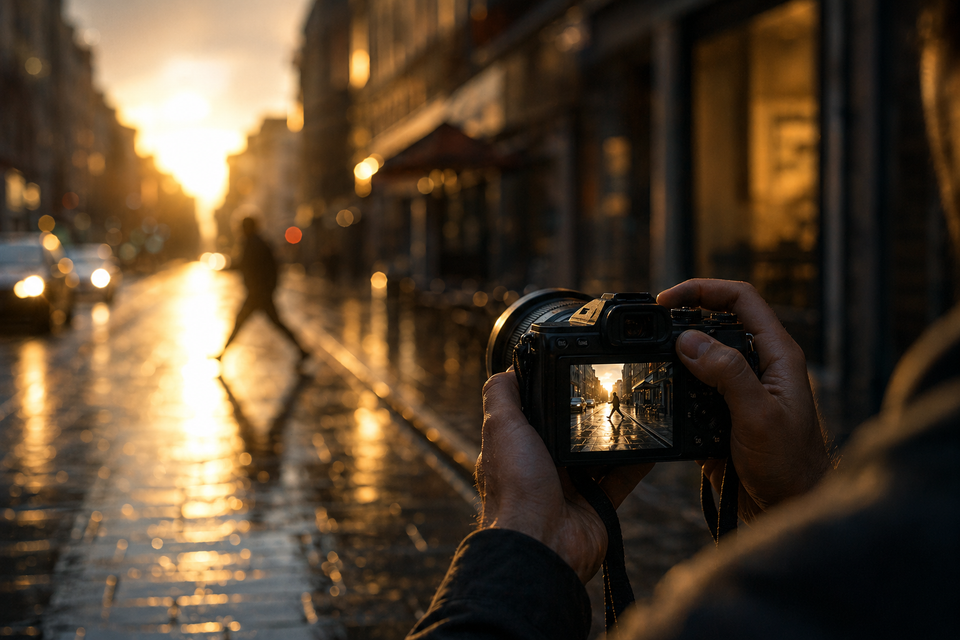
My best friend, who also happens to be my wife, said something to me once that I have never forgotten. She is not a photographer, not particularly what you would call creative in that way, but she has a way of cutting straight to the thing without even trying.
She said, "Stop looking for the perfect moment. The perfect moment is always the one you almost missed." She also said other similiar variations of this along the way.
I did not think much of it at the time. It sounded like the kind of thing you stitch onto a pillow. But I kept coming back to it, especially where nothing seemed to be working, where the light was flat and the subject was uncooperative and I was starting to wonder why I had even brought the camera.
Because here is what I eventually figured out. The almost missed moment is not an accident. It is a reward.
The Shots That Find You
There is a category of photograph that you cannot plan for. You cannot scout it, you cannot set up for it, you cannot will it into existence by arriving early and staying late. It just happens, usually on the periphery of whatever you were actually trying to shoot, usually at the exact moment you are least ready for it.
A stranger walks through your frame at precisely the right second. The light breaks through cloud cover for thirty seconds and hits something you were not even looking at. A kid does something completely unrepeatable in the background of a shot you were composing of something else entirely.
These are the photographs that stop people when they see them. Not because they are technically perfect but because they feel alive in a way that planned shots rarely do. They have an electricity that comes directly from their spontaneity.
You cannot manufacture that. But you can put yourself in a position to receive it.
What Almost Missing Something Actually Means
When you almost miss a shot, something important happened. Your eye saw it before your brain caught up. That is not a mistake. That is your instincts working exactly the way they are supposed to.
The photographers who consistently catch these moments are not faster or luckier than everyone else. They have just learned to trust that flicker of recognition, that half second where something registers before they fully understand what they are seeing, and they have trained themselves to react to it before the thinking starts.
Thinking is slow. Seeing is fast. The best photographs live in the gap between them.
How to Miss Less
You will never catch everything. Nobody does. But here are the habits that close the gap.
Keep the camera on and ready. Not in the bag, not capped, not powered down to save battery. On. Ready. The shot that finds you will not wait while you dig through a bag.
Slow your feet down. The faster you move through a scene the less you actually see. Some of the best street photographers move at a pace that looks almost leisurely to outsiders because they are not rushing to the next thing. They are inhabiting the current one.
And resist the urge to review your shots while you are still in the middle of shooting. The moment you drop your eye to the screen you are looking at the past. Keep your eye on what is happening right now.
The Twist
Here is where I want to leave you, and this is the part that surprised me when I finally understood it.
The almost missed shot, the one that found you sideways, the one you nearly walked past, is often the most honest photograph you will ever take. Because it came from somewhere real. It bypassed all of your self consciousness and your planning and your second guessing and it just happened.
Your best photography might not come from trying harder. It might come from staying open a little longer.
Keep the camera up. Keep moving slowly. And pay attention to the edges of things.
That is where the good stuff hides.
CameraDates 2026